




Intenational Literature
Pylopass® may influence UBT (Urea Breath Test) values, an indicator for Helicobacter pylori
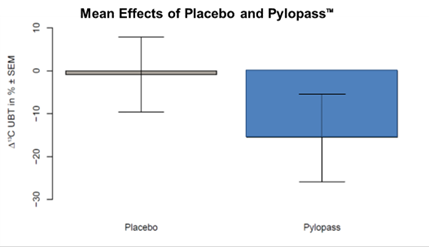
This includes:
- Studies indicate Pylopass® can adhere to specific gastric bacteria and influence UBT values, supporting its role in microbiome research and functional food development
- Note: This content is for research reference only and does not constitute efficacy claims.
Target Audience
Applications

Capsules

Tablets
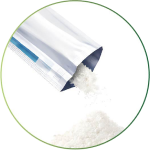
Powder sachets
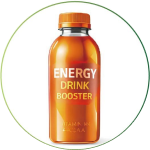
Beverages
Resource Center
FAQ
Pylopass® is a patented probiotic ingredient scientifically known as Lactobacillus reuteri DSM 17648. Developed in Germany and manufactured in France, it is a precision targeting strain designed for gastric health formulations.
Pylopass® possesses unique adhesion properties and target recognition capabilities. It can adhere to specific bacterial groups in the stomach and is considered a precision targeting strain for managing gastric microecological balance.
No refrigeration is required. Pylopass® features excellent room temperature stability and can be stored at ambient temperatures, which facilitates mass production in the food industry and reduces cold chain logistics costs.
UBT (Urea Breath Test) is a primary indicator for detecting Helicobacter pylori. Research shows that supplementing with Pylopass® can influence UBT values, helping to maintain a healthy gastric environment.
It is especially suitable for individuals who frequently eat out, have a fast-paced lifestyle, maintain irregular eating habits, or prioritize daily gastric health maintenance.
It offers high formulation flexibility and is suitable for various product formats, including capsules, tablets, powder sachets, and functional beverages.
Yes, Pylopass® has passed safety evaluations from US GRAS and EU QPS, meeting the compliance requirements of major international markets.
It complies with international quality systems, including ISO 22000 standards, and has obtained Halal and non-GMO (non-genetically modified organism) certifications.
Yes, the sources cite several international studies (e.g., Mehling H et al., 2013) confirming that non-viable Pylopass® is a novel approach for controlling Helicobacter pylori in humans.
It operates by using physical surface structures to bind with specific bacteria; therefore, it does not rely on viability to perform its target recognition role in the gastrointestinal tract.
References
Mehling, H., & Busjahn, A. (2013). Non-viable Lactobacillus reuteri DSMZ 17648 (Pylopass™) as a new approach to Helicobacter pylori control in humans. Nutrients, 5(8), 3062-3073.
Holz, C., Busjahn, A., Mehling, H., Arya, S., Boettner, M., Habibi, H., & Lang, C. (2015). Significant reduction in Helicobacter pylori load in humans with non-viable Lactobacillus reuteri DSM17648: a pilot study. Probiotics and antimicrobial proteins, 7(2), 91-100.
Bordin, D. S., Voynovan, I. N., Khomeriki, S. G., Yanova, O. B., Kim, V. A., Bystrovskaya, E. V., & Shishin, K. V. Efficacy and safety of Lactobacillus reuteri DSMZ17648 in patients infected with Helicobacter pylori and not having absolute indications for eradication therapy.
Parolova, N. I., Kornienko, E. A., Antonov, P. V., Egorov, M., Gorbunov, E. F., & Dmitrienko, M. A. (2015). An innovative approach in the treatment of H. pylori infection in children. RMJ, 22, 1339-1340.
Buckley, M., Lacey, S., Doolan, A., Goodbody, E., & Seamans, K. (2018). The effect of Lactobacillus reuteri supplementation in Helicobacter pylori infection: a placebo-controlled, single-blind study. BMC nutrition, 4(1), 48.
Mihai, C. Ă. T. Ă. L. I. N. A., Mihai, B. M., Dranga, M., Cardoneanu, A., & Prelipcean, C. C. (2019). Lactobacillus reuteri–an alternative in the first-line of helicobacter pylori eradication. Farmacia, 67(5), 871-876.
Muresan, I. A. P., Pop, L. L., & Dumitrascu, D. L. (2019). Lactobacillus reuteri versus triple therapy for the eradication of Helicobacter pylori in functional dyspepsia. Medicine and pharmacy reports, 92(4), 352.
Kornienko, E. A., Parolova, N. I., Ivanov, S. V., Polev, D. S., Zykin, P. A., Kondratenko, Y. D., & Zakharchenko, M. M. (2020). Gastric microbiota and probiotics opportunities in helicobacter pylori eradication in children. Gastroenterol Hepatol Open Access, 11(1), 13-23.
Parth, K., Prudhivi, R., Palatheeya, S., Abbas, S. K., Varsha, K., Niharika, B. V., & Lyngkhoi, B. (2021). Efficacy of Lactobacillus reuteri supplementation in eradication of H. pylori: A comparison study with triple drug therapy. Journal of Pharmaceutical Research International, 33(52B), 151-159.