

Intenational Literature
Lemon balm may reduce cortisol levels
(Scholey A. et al., 2014)
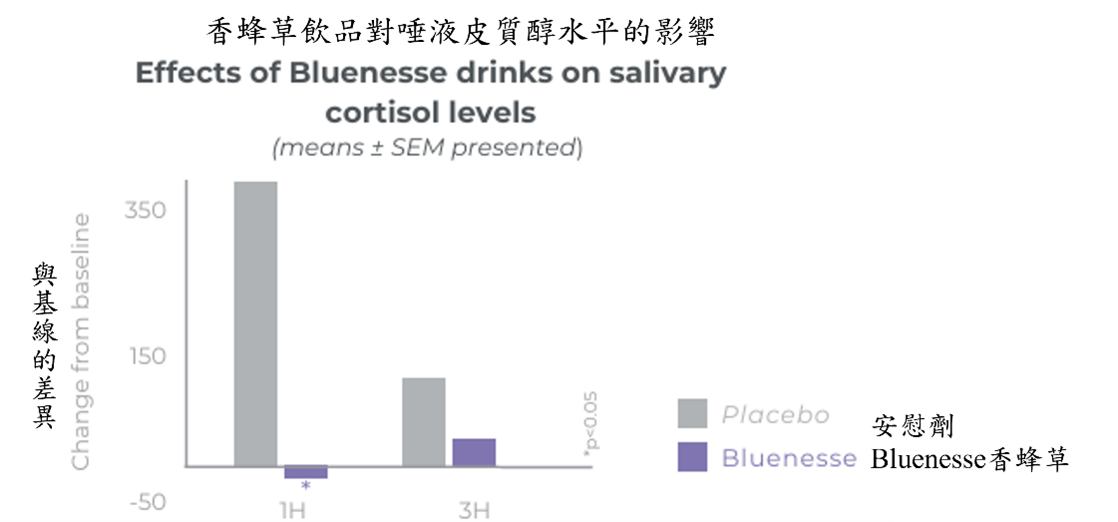
Note: This content is for research reference only and does not constitute efficacy claims.
Target Audience
Applications
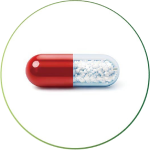
Capsules
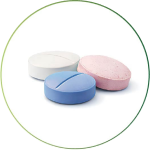
Tablets
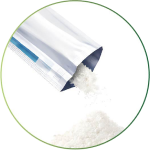
Powder sachets
Beverages
Resource Center
FAQ
Bluenesse® is a botanical extract developed by a German team using premium European lemon balm (*Melissa officinalis* L.), standardized for rosmarinic acid through patented technology.
The key active indicator is rosmarinic acid, which helps ensure the stability of product specifications across every batch.
Yes, Bluenesse® possesses excellent water solubility, making it highly suitable for applications in drinks, powder packs, and various delivery formats.
The product has received multiple international quality endorsements, including Halal, Kosher, Non-GMO, and radiation-free certifications.
It is suitable for students and knowledge workers requiring long-term focus, professionals in high-stress environments, and seniors seeking a relaxed lifestyle.
The manufacturer regularly sends the raw material to third-party testing units for pesticide residue analysis, and all results show "not detected," ensuring food safety.
It offers excellent application versatility, suitable for capsules, tablets, powder packs, and various functional beverages.
Yes, Bluenesse® is labeled as a Clean Label-compliant ingredient, meeting modern consumer demands for transparent and pure ingredients.
Through the patented manufacturing technology of the German team, a single source is ensured, maintaining excellent batch consistency and component quality.
The manufacturer provides stability data proving that it can maintain active components under different application environments.
References
Fujii, F., Hashimoto, T., Suzuki, N., Suzuki, R., & MORI, K. (2008). Pilot study of the standardized oats herb extract for smoking reduction. 応用薬理, 75(3-4), 47-53.
Schellekens, C., Perrinjaquet-Moccetti, T., Wullschleger, C., & Heyne, A. (2009). An extract from wild green oat improves rat behaviour. Phytotherapy Research: An International Journal Devoted to Pharmacological and Toxicological Evaluation of Natural Product Derivatives, 23(10), 1371-1377.
Dimpfel, W., Storni, C., & Verbruggen, M. (2011). Ingested oat herb extract (Avena sativa) changes EEG spectral frequencies in healthy subjects. The Journal of Alternative and Complementary Medicine: Paradigm, Practice, and Policy Advancing Integrative Health, 17(5), 427-434.
Berry, N. M., Robinson, M. J., Bryan, J., Buckley, J. D., Murphy, K. J., & Howe, P. R. (2011). Acute effects of an avena sativa herb extract on responses to the stroop color-word test. The Journal of Alternative and Complementary Medicine: Paradigm, Practice, and Policy Advancing Integrative Health, 17(7), 635-637.
Wong, R. H., Howe, P. R., Bryan, J., Coates, A. M., Buckley, J. D., & Berry, N. M. (2012). Chronic effects of a wild green oat extract supplementation on cognitive performance in older adults: a randomised, double-blind, placebo-controlled, crossover trial. Nutrients, 4(5), 331-342.
Wong, R. H., Howe, P. R., Coates, A. M., Buckley, J. D., & Berry, N. M. (2013). Chronic consumption of a wild green oat extract (Neuravena) improves brachial flow-mediated dilatation and cerebrovascular responsiveness in older adults. Journal of Hypertension, 31(1), 192-200.
Kennedy, D. O., Jackson, P. A., Forster, J., Khan, J., Grothe, T., Perrinjaquet-Moccetti, T., & Haskell-Ramsay, C. F. (2017). Acute effects of a wild green-oat (Avena sativa) extract on cognitive function in middle-aged adults: A double-blind, placebo-controlled, within-subjects trial. Nutritional Neuroscience, 20(2), 135-151.
Martinez-Horta, S., Ivanir, E., Perrinjaquet-Moccetti, T., Keuter, M. H., & Kulisevsky, J. (2021). Effects of a green oat herb extract on cognitive performance and neurophysiological activity: a randomized double-blind placebo-controlled study. Frontiers in Neuroscience, 15, 748188.
Tsuboi, T., Satake, Y., Hiraga, K., Yokoi, K., Hattori, M., Suzuki, M., ... & Katsuno, M. (2022). Effects of MAO-B inhibitors on non-motor symptoms and quality of life in Parkinson's disease: A systematic review. npj Parkinson's Disease, 8(1), 75.