
Intenational Literature
Microencapsulated carotenoids demonstrate improved stability
(Kennedy et al., 2015).
This includes:
- β-carotene is widely studied for its nutritional role, absorption characteristics, and stability
Note: This content is for research reference only and does not constitute efficacy claims.
Target Audience
Applications
Capsules
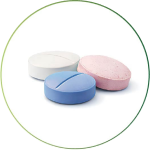
Tablets
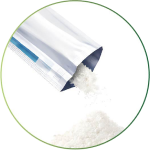
Powder sachets

Beverages
Resource Center
FAQ
Lyc-O-Beta® is a β-carotene raw material utilizing advanced microencapsulation technology. It is derived from the precision fermentation of Blakeslea trispora and offers high stability and formulation compatibility.
Yes, this raw material is produced through the fermentation of Blakeslea trispora and is a natural-equivalent form, meeting the market demand for natural sources.
This technology significantly enhances the oxidative stability, light resistance, and heat resistance of β-carotene. It also effectively reduces the raw material's characteristic odor and improves compatibility with various formulas.
Due to its microencapsulated nature, it is highly suitable for use in capsules, tablets, powder packs, and general food matrices like liquids, demonstrating excellent application flexibility.
The raw material has passed multiple international management system certifications, including Halal, Kosher, FSSC22000, and GMP, ensuring its safety and high quality.
To maintain the activity and stability of the raw material, it is recommended to store it in a cool, dry place, avoiding high temperatures and direct sunlight.
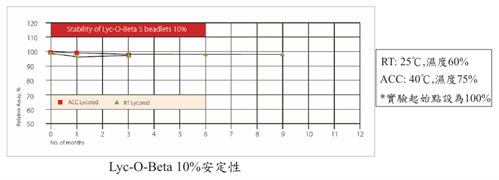
Microencapsulation acts like a protective layer for carotene, isolating it from external oxidative stress. According to manufacturer experiments, it maintains good potency at both 25°C and 40°C.
Fermented carotene is derived from microbial precision fermentation, such as the Blakeslea trispora used in Lyc-O-Beta®, and is considered a natural-equivalent form, which is more preferred by modern consumers than purely synthetic types.
It effectively reduces the characteristic odor that β-carotene raw materials may naturally have, making the flavor of end products like powder packs or tablets more acceptable to consumers.
It is a microbial source used to produce natural β-carotene. Through a precision fermentation process, it can yield β-carotene nutrients identical to the natural form.
References
Sharma, K. D., Karki, S., Thakur, N. S., & Attri, S. (2012). Chemical composition, functional properties and processing of carrot—a review. Journal of food science and technology, 49(1), 22-32.