
Literature Summary
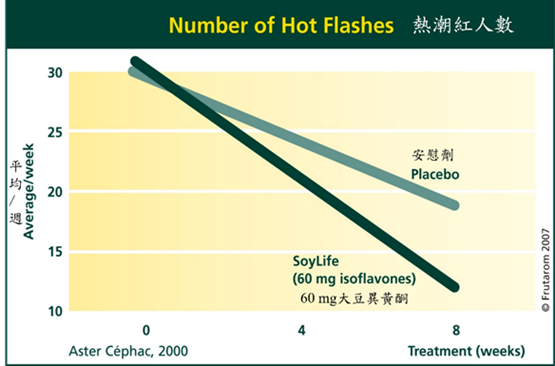
Soy germ isoflavones may support improvement of menopausal symptoms such as hot flashes
(Aster Cephac et al., 2000).
This include:
- Research explores their role in phytochemistry, estrogen receptor interaction, antioxidant activity, and intestinal metabolism
Note: This section summarizes research directions only and does not imply any health claims.
Target Audience
Applications
Capsules
Tablets
Powders
Beverages
Resource Center
FAQ
SoyLife® is a non-GMO soy germ isoflavone raw material from Spain, characterized by using only the germ part, which accounts for about 1–2% of the whole soybean, instead of typical oil-pressing by-products.
Yes, SoyLife® has received SGS Non-GMO third-party certification, providing high product credibility and safety.
The material is available in 2% and 40% isoflavone specifications with excellent batch consistency, making it ideal for B2B health food development.
SoyLife® is primarily composed of natural glycoside isoflavones, a structure that benefits product formulation design and enhances ingredient stability.
Due to its stability and diverse forms, SoyLife® can be used in various dosage forms, including powders, capsules, tablets, and beverages.
Yes, SoyLife® is considered a Clean Label compatible material, suitable for products seeking natural and transparent ingredients.
Yes, there are over 30 peer-reviewed publications covering its phytochemistry, metabolism, and safety research.
SoyLife® specifically utilizes the soy germ, avoiding the use of by-products from general soybean oil pressing, ensuring the purity and specificity of the raw material.
It is recommended to store the raw material in a cool, dry place, avoiding high temperatures and humid environments.
Yes, SoyLife® provides both soy germ powder and soy germ extract powder forms to facilitate different production needs.
References
Song, T., Barua, K., Buseman, G., & Murphy, P. A. (1998). Soy isoflavone analysis: quality control and a new internal standard. The American journal of clinical nutrition, 68(6), 1474S-1479S.
Zhang, Y., Wang, G. J., Song, T. T., Murphy, P. A., & Hendrich, S. (1999). Urinary disposition of the soybean isoflavones daidzein, genistein and glycitein differs among humans with moderate fecal isoflavone degradation activity. The Journal of nutrition, 129(5), 957-962.
De Boever, P., Deplancke, B., & Verstraete, W. (2000). Fermentation by gut microbiota cultured in a simulator of the human intestinal microbial ecosystem is improved by supplementing a soygerm powder. The Journal of nutrition, 130(10), 2599-2606.
Messina, M. J., & Loprinzi, C. L. (2001). Soy for breast cancer survivors: a critical review of the literature. The Journal of nutrition, 131(11), 3095S-3108S.
Jordan, V. C., Gapstur, S., & Morrow, M. (2001). Selective estrogen receptor modulation and reduction in risk of breast cancer, osteoporosis, and coronary heart disease. Journal of the National Cancer Institute, 93(19), 1449-1457.
Nagata, C., Takatsuka, N., Kawakami, N., & Shimizu, H. (2001). Soy product intake and premenopausal hysterectomy in a follow-up study of Japanese women. European journal of clinical nutrition, 55(9), 773-777.
De Boever, P., Wouters, R., & Verstraete, W. (2001). Combined use of Lactobacillus reuteri and soygerm powder as food supplement. Letters in Applied Microbiology, 33(6), 420-424.
Setchell, K. D., Brown, N. M., & Lydeking-Olsen, E. (2002). The clinical importance of the metabolite equol—a clue to the effectiveness of soy and its isoflavones. The Journal of nutrition, 132(12), 3577-3584.
Morabito, N., Crisafulli, A., Vergara, C., Gaudio, A., Lasco, A., Frisina, N., ... & Squadrito, F. (2002). Effects of genistein and hormone‐replacement therapy on bone loss in early postmenopausal women: A randomized double‐blind placebo‐controlled study. Journal of Bone and Mineral Research, 17(10), 1904-1912.