
國際文獻
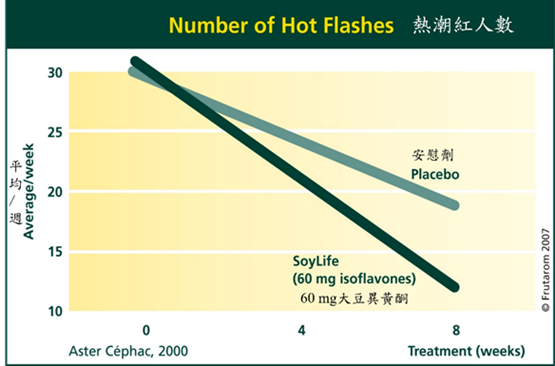
改善女性更年期症狀(ex:熱潮紅)
(Aster Cephac et al., 2000).
This includes:
- 大豆胚芽異黃酮在植物化學、雌激素受體結合特性、抗氧化活性與腸道代謝轉化(如Daidzein→Equol 途徑)中的角色,並評估其作為機能性食品素材的安全性與生化特性,支持其在營養科學與植物化學領域的研究價值
Note: 本內容僅為研究應用方向整理,非效果或結果宣稱
適用族群
適用劑型
膠囊
錠劑
粉包
飲品.液劑
相關資訊
常見問答
SoyLife® 是一種源自西班牙的非基因改造大豆胚芽異黃酮原料,其特色是僅取用大豆中約占 1–2% 的胚芽部位,而非一般的榨油副產物
是的,SoyLife® 已獲得 SGS Non-GMO 第三方認證,具有高度的產品可信度與安全性
該原料提供 2% 與 40% 兩種異黃酮規格,且批次一致性佳,利於 B2B 保健食品開發
SoyLife® 以天然醣基型(Glycoside)異黃酮為主,這種結構有利於產品配方設計並提高成分穩定性
由於其穩定性與多樣形式,SoyLife® 可應用於粉末、膠囊、錠劑及飲品等多種劑型
是的,SoyLife® 被視為符合 Clean Label 要求的素材,適合追求天然與透明成分的產品
是的,已有超過 30 篇同儕審查發表的論文涵蓋其植物化學、代謝與安全性研究.
SoyLife® 專一取用大豆胚芽,避免了使用一般大豆榨油後的副產物,確保了原料的純度與專一性
建議將原料保存在陰涼乾燥處,並避免高溫與潮濕環境
是的,SoyLife® 提供大豆胚芽粉與大豆胚芽萃取粉兩種形式,方便不同生產需求
參考文獻
Song, T., Barua, K., Buseman, G., & Murphy, P. A. (1998). Soy isoflavone analysis: quality control and a new internal standard. The American journal of clinical nutrition, 68(6), 1474S-1479S.
Zhang, Y., Wang, G. J., Song, T. T., Murphy, P. A., & Hendrich, S. (1999). Urinary disposition of the soybean isoflavones daidzein, genistein and glycitein differs among humans with moderate fecal isoflavone degradation activity. The Journal of nutrition, 129(5), 957-962.
De Boever, P., Deplancke, B., & Verstraete, W. (2000). Fermentation by gut microbiota cultured in a simulator of the human intestinal microbial ecosystem is improved by supplementing a soygerm powder. The Journal of nutrition, 130(10), 2599-2606.
Messina, M. J., & Loprinzi, C. L. (2001). Soy for breast cancer survivors: a critical review of the literature. The Journal of nutrition, 131(11), 3095S-3108S.
Jordan, V. C., Gapstur, S., & Morrow, M. (2001). Selective estrogen receptor modulation and reduction in risk of breast cancer, osteoporosis, and coronary heart disease. Journal of the National Cancer Institute, 93(19), 1449-1457.
Nagata, C., Takatsuka, N., Kawakami, N., & Shimizu, H. (2001). Soy product intake and premenopausal hysterectomy in a follow-up study of Japanese women. European journal of clinical nutrition, 55(9), 773-777.
De Boever, P., Wouters, R., & Verstraete, W. (2001). Combined use of Lactobacillus reuteri and soygerm powder as food supplement. Letters in Applied Microbiology, 33(6), 420-424.
Setchell, K. D., Brown, N. M., & Lydeking-Olsen, E. (2002). The clinical importance of the metabolite equol—a clue to the effectiveness of soy and its isoflavones. The Journal of nutrition, 132(12), 3577-3584.
Morabito, N., Crisafulli, A., Vergara, C., Gaudio, A., Lasco, A., Frisina, N., ... & Squadrito, F. (2002). Effects of genistein and hormone‐replacement therapy on bone loss in early postmenopausal women: A randomized double‐blind placebo‐controlled study. Journal of Bone and Mineral Research, 17(10), 1904-1912.